
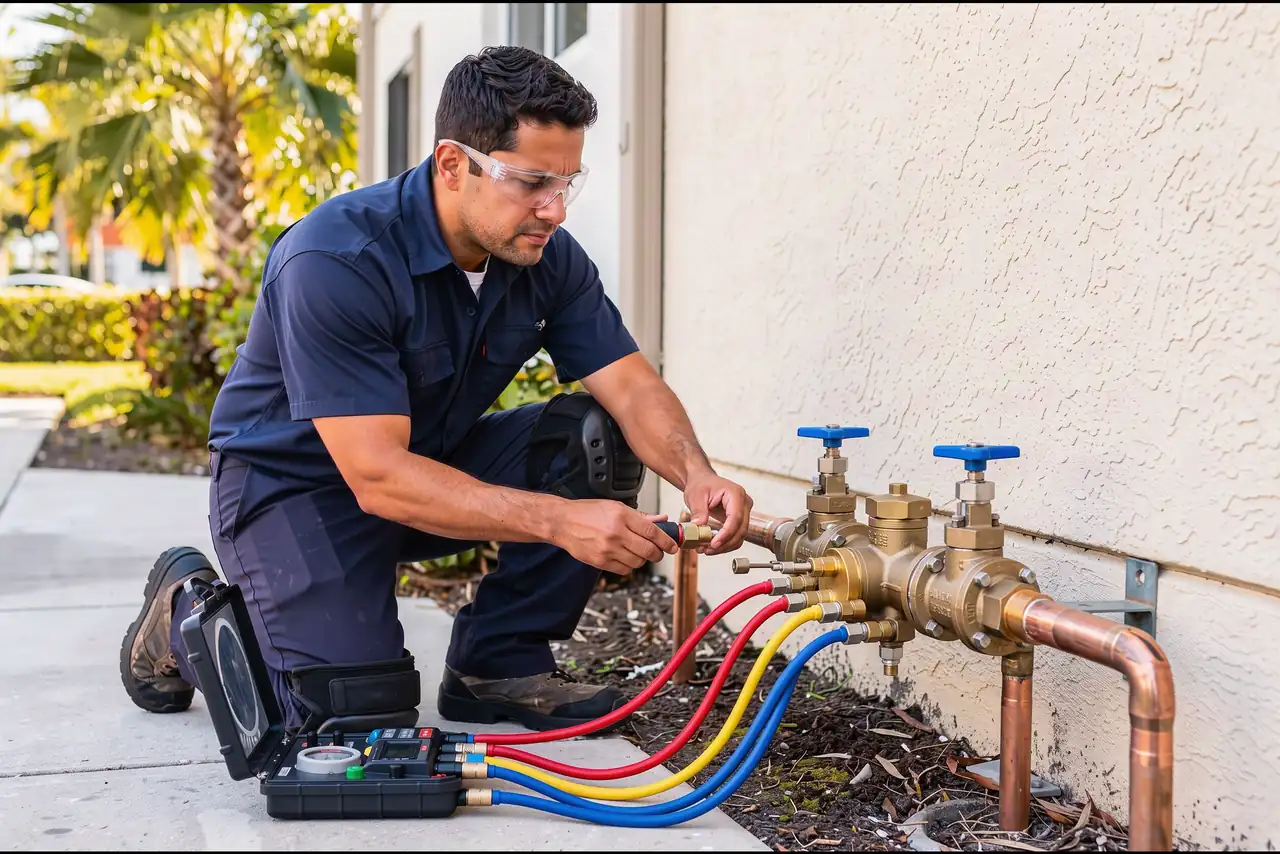
Backflow Prevention & Testing
Backflow device installation, testing, and plumbing certifications.
A backflow prevention device stops contaminated water from siphoning back into the clean municipal water supply — a safety requirement most Florida municipalities require to be tested annually for both residential irrigation systems and commercial properties.
Bear Plumbing installs backflow preventers and performs the certified testing and paperwork needed to stay compliant with your local water utility, so property owners and managers aren't left scrambling before a compliance deadline.
For property managers, HOAs, and business owners, the goal is simple: a test done right, paperwork filed on time, and no surprise notice from the water utility.
What's Included
- Backflow preventer installation (irrigation, domestic, and fire line)
- Annual backflow testing and certification
- Repair or replacement of failed backflow devices
- Submission of test results to the local water authority
- Commercial property and HOA compliance testing programs
Signs You May Need This Service
- Your municipality's annual backflow test notice is due
- You're installing a new irrigation system or fire line
- A property management company needs documentation for multiple properties
- A previous test failed and the device needs repair or replacement
What Backflow Is — and Why the Utility Cares
Backflow happens when water flows the wrong way — from your property's plumbing back into the public water supply. It can be caused by back-pressure (for example, from a pump or boiler) or back-siphonage (a sudden drop in water main pressure, such as during a main break or heavy firefighting). Without a working backflow preventer, irrigation water, fertilizer, fire sprinkler water, or chemicals could be pulled into the drinking water system.
Florida rules require water utilities to run cross-connection control programs, and utilities across South Florida require backflow assemblies to be tested on a regular schedule — most commonly once a year — by a certified tester, with the results reported back to the utility.
Who Usually Needs a Backflow Preventer
- Homes and buildings with an in-ground irrigation system
- Commercial buildings, restaurants, medical offices, and other businesses
- Condominiums, apartment buildings, and HOAs
- Properties with a fire sprinkler line
- Properties with pools, boilers, or other equipment connected to the water supply
Your water utility's notice will state which assemblies are on file for your property and when the test is due. If you are not sure, we can look at what is installed and help you sort it out.
Our Approach for Multi-Property Clients
Property managers and HOAs often juggle several buildings with different due dates. We help keep testing organized across a portfolio: scheduling around tenants and business hours, testing each assembly, repairing failed devices on the spot when possible, and submitting results so every property stays compliant.
Our Process
Locate the Device
We identify the backflow preventer and confirm the make and model.
Test
Certified testing equipment checks the device against required standards.
Repair if Needed
A failed device is repaired or replaced on the spot where possible.
File the Paperwork
Results are submitted to your local water authority to keep you compliant.
Frequently Asked Questions
In most Florida municipalities, yes — properties with an irrigation system, fire line, or certain commercial connections are typically required to have annual backflow testing performed and filed with the local water utility.
We can usually repair or replace the device during the same visit and re-test it so you stay compliant without a second trip.
Yes — we work with property managers and HOAs to schedule and track testing across a portfolio of properties.
Most South Florida water utilities require testing at least once a year, and some assemblies may be tested more often. The notice from your water utility lists your due date — share it with us and we'll schedule the test before it's due.
Utilities typically send follow-up notices and can apply penalties or, in some cases, suspend water service until the test is completed. Testing before the deadline avoids all of that.
Often, yes. Many failures come from worn internal parts such as springs, seals, or check valves, which we can rebuild or replace and then re-test. If the assembly is too damaged or outdated, we'll recommend a replacement.
Areas We Serve
We serve homes and businesses across Miami-Dade, Broward, and Palm Beach Counties, including: