
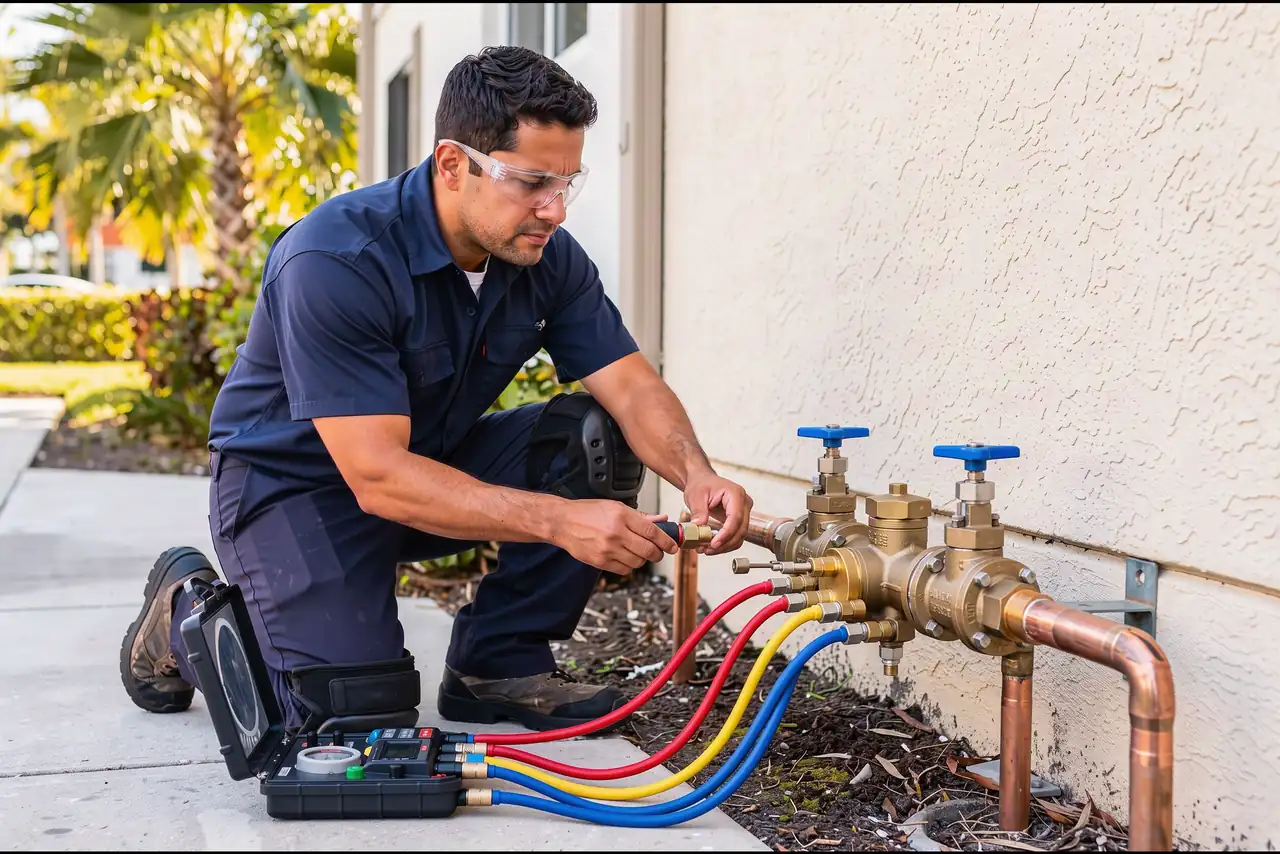
If you own or manage property in Miami-Dade, Broward, or Palm Beach County, you have probably received a notice from your water utility saying a backflow test is due. For many owners it is a once-a-year chore that is easy to forget — until a follow-up notice arrives. Here is what backflow testing is, why it is required, and how to stay ahead of it.
What Is Backflow?
Backflow is water flowing the wrong way: from a property's plumbing back into the public water supply. It can happen two ways:
- Back-siphonage — a sudden drop in pressure in the water main (for example, during a main break or heavy firefighting) pulls water backward out of buildings
- Back-pressure — pressure inside the property, from a pump, boiler, or elevated tank, pushes water back into the main
Either way, water from irrigation systems, fire sprinkler lines, pools, boilers, or commercial equipment could be pulled into the drinking water that everyone else uses. A backflow preventer is a valve assembly that allows water to flow in only one direction.
Who Needs a Backflow Preventer?
- Homes with an in-ground irrigation system connected to city water
- Commercial buildings, restaurants, medical and dental offices, and other businesses
- Condominiums, apartment buildings, and HOAs
- Properties with a fire sprinkler system
- Properties with pools, boilers, chemical systems, or other equipment connected to the water supply
Why Testing Is Required
Florida rules require public water systems to operate cross-connection control programs. As part of those programs, utilities across South Florida require backflow assemblies to be tested on a regular schedule — most commonly once a year — by a certified tester, with the results reported to the utility. The exact rules and deadlines come from your water utility, and your notice lists the assemblies on file for your property.
Keep your notice
Your utility's notice shows the assembly type, serial number, and due date. Share it with your tester so the right device is tested and the results match the utility's records.
What Happens During a Test
- The tester locates the assembly and confirms it matches the utility's records
- Test equipment is connected to the assembly's test cocks
- The tester checks that each check valve and relief valve holds and opens at the right pressures
- Results are recorded and submitted to the utility
- If the assembly fails, it is repaired or rebuilt and re-tested
A test usually requires a brief water shut-off for the area the assembly serves, so commercial tests are often scheduled around business hours.
Need a plumber now? Bear Plumbing has served Miami-Dade, Broward & Palm Beach since 2000. Licensed & insured (CFC057720), with 24/7 emergency service after hours.
What If My Backflow Preventer Fails?
Failures are common and usually fixable. Springs, seals, rubber parts, and check valves wear out over time, and debris can keep valves from seating properly. A tester can often rebuild the assembly with a repair kit and re-test it the same visit. If the assembly is badly corroded, outdated, or no longer serviceable, it may need to be replaced.
Tips for Property Managers
- Keep a simple list of every property, assembly, serial number, and due date
- Schedule tests a few weeks before the deadline to leave time for any repairs
- Use one tester for the whole portfolio so records stay consistent
- Keep copies of every submitted test report
- Remember that new irrigation or fire lines usually need a backflow assembly installed and tested before use
Frequently Asked Questions
Most South Florida water utilities require testing at least once a year. Your utility's notice states the due date for each assembly on your property.
Testing must be done by a certified backflow tester whose results the utility accepts. Ask for proof of certification, and make sure the tester submits the results to your utility.