
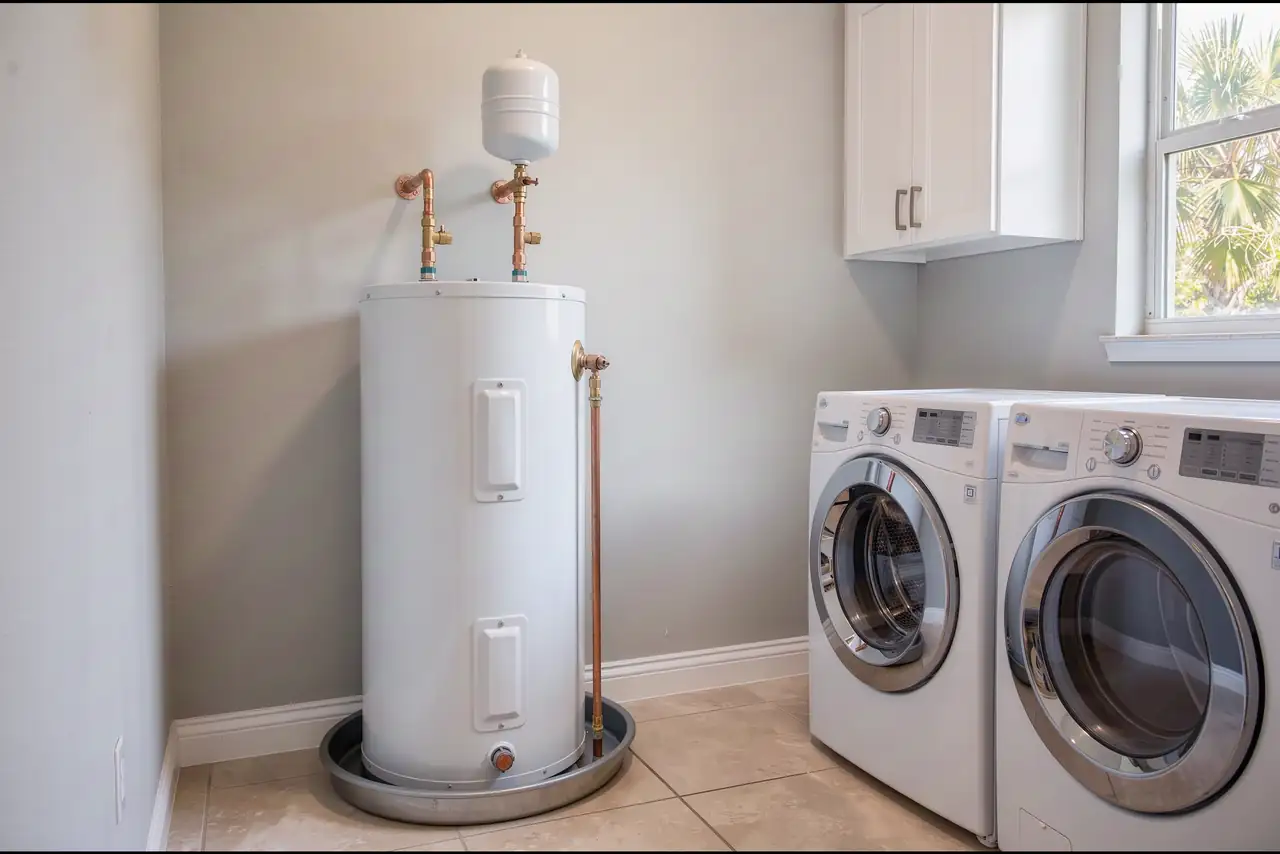
When a water heater fails, most people simply replace it with the same type. But it is worth taking a minute to compare your options, because the right choice depends on how much hot water your household uses, where the heater sits, and what your home's gas or electrical service can support.
How Each Type Works
A tank water heater keeps a reservoir of water — commonly 40 to 50 gallons in a home — heated and ready at all times. A tankless (on-demand) water heater has no reservoir; it heats water as it flows through the unit, only when a hot water tap is open.
Tank Water Heaters
- Lower upfront cost and simpler installation, especially when replacing an existing tank
- Familiar to most plumbers and easy to service
- Can run out of hot water when several showers, the dishwasher, and the washer run back to back
- Use energy to keep the stored water hot even when no one is using it
- Take up more space — often a garage corner or utility closet
Tankless Water Heaters
- Continuous hot water as long as the unit is sized for your demand
- Wall-mounted and compact, freeing up closet or garage space
- Typically use less energy because there is no stored tank to keep hot
- Higher upfront cost, and installation may require a larger gas line, new venting, or upgraded electrical service
- Need periodic descaling, especially with South Florida's mineral-heavy water
A South Florida advantage
Our incoming water is warmer for most of the year than in northern states, so a tankless unit doesn't have to raise the temperature as much. That helps tankless heaters deliver more hot water for their size.
Which One Fits Your Home?
A tank heater is often the practical choice when you are replacing an existing tank, your budget is tight, or your home's gas or electrical service would need major upgrades for tankless. Tankless is often worth considering when space is limited, your household regularly runs out of hot water, or you plan to stay in the home long enough to benefit from lower operating costs and a longer service life.
In condos, building rules, venting options, and electrical capacity can limit what is possible, so check with your association before choosing a new type of heater.
Need a plumber now? Bear Plumbing has served Miami-Dade, Broward & Palm Beach since 2000. Licensed & insured (CFC057720), with 24/7 emergency service after hours.
Maintenance Matters in Either Case
- Tank heaters: flush once a year to clear sediment, check the anode rod every few years, and test the pressure relief valve
- Tankless heaters: descale on the schedule the manufacturer recommends, and clean the inlet filter
- Both: keep the area dry and clear, and watch for drips around fittings and valves
Signs It's Time to Decide
- The tank is around 10 years old or more
- You see rust-colored hot water or water around the base of the heater
- The heater rumbles, pops, or takes longer to recover
- You regularly run out of hot water
Frequently Asked Questions
For many households, yes — especially those that run out of hot water, are short on space, or plan to stay in the home for years. Florida's warmer incoming water helps tankless units perform well. The trade-off is a higher upfront cost and possible gas, venting, or electrical upgrades.
Tank heaters typically last about 8 to 12 years. Tankless units generally last longer when they are descaled and maintained regularly.