
If your shower head is crusted with white deposits, your glasses come out of the dishwasher spotty, and your water heater rumbles, you are seeing hard water at work. It is common across South Florida, and while hard water is not a health hazard, it quietly shortens the life of fixtures and appliances and can raise energy costs.
Why South Florida Water Is Often Hard
Much of the region's drinking water comes from the Biscayne Aquifer, a shallow limestone formation under Miami-Dade, Broward, and Palm Beach counties. As water moves through limestone it picks up calcium and magnesium — the minerals that make water "hard." Utilities treat the water to make it safe, and hardness levels vary by area and utility, but many homes still see mineral scale over time.
Signs of Hard Water
- White or chalky crust on faucets, shower heads, and around drains
- Spots and film on glassware, dishes, and shower doors
- Soap and shampoo that don't lather well
- A water heater that rumbles, pops, or recovers slowly
- Reduced flow from shower heads and faucet aerators
- Dry skin or dull hair after showering
What Scale Does Inside Your Plumbing
Scale forms wherever water is heated or sits still, so water heaters take the biggest hit. Sediment at the bottom of a tank insulates the water from the burner or element, so the heater runs longer and works harder. In tankless heaters, scale builds up inside the heat exchanger and reduces efficiency. Over time, scale also clogs aerators and shower heads, wears out washing machine and dishwasher parts, and narrows older pipes.
Quick check
Look closely at a shower head or faucet aerator. A white, crunchy buildup that dissolves in vinegar is mineral scale from hard water.
Need a plumber now? Bear Plumbing has served Miami-Dade, Broward & Palm Beach since 2000. Licensed & insured (CFC057720), with 24/7 emergency service after hours.
Your Options
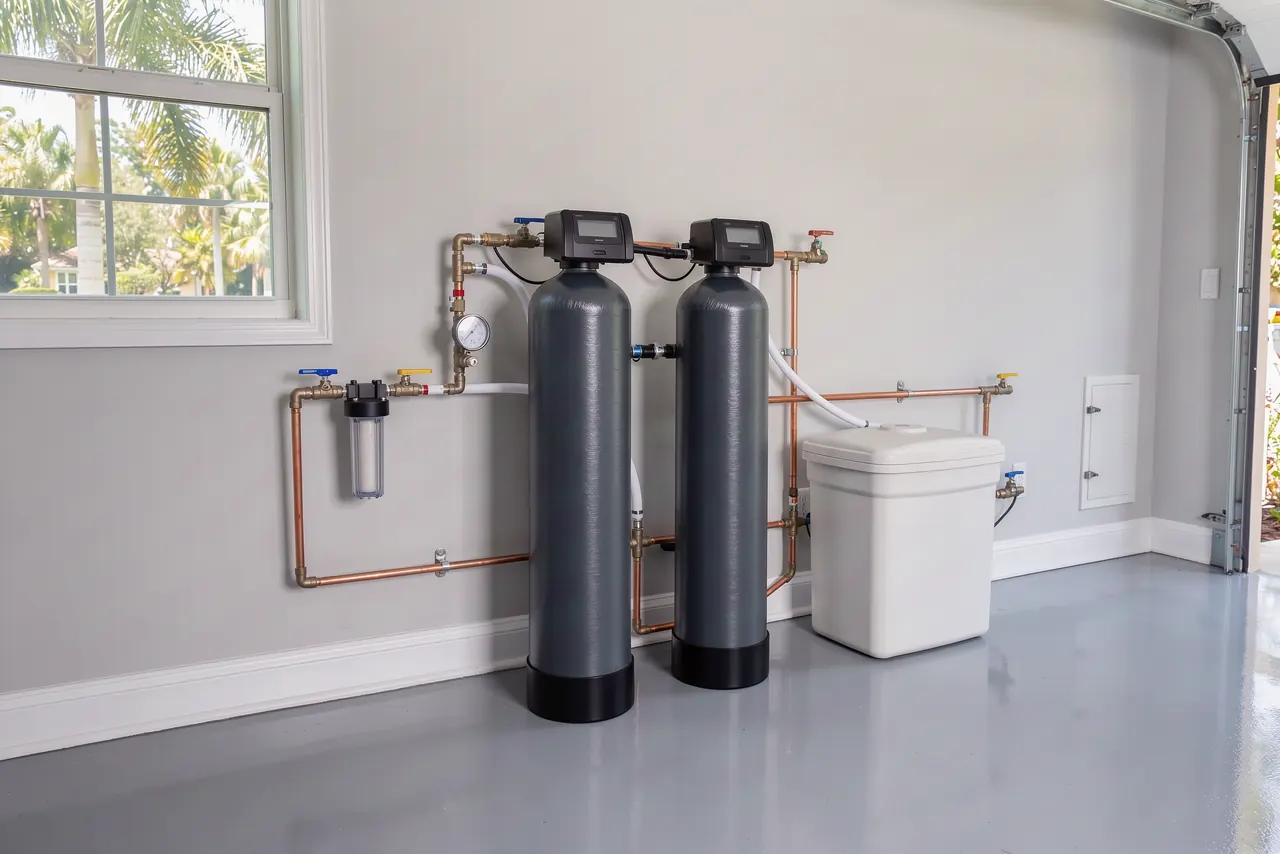
- Water softener — removes calcium and magnesium, the minerals that cause scale; the most direct fix for hardness
- Whole-house filtration — reduces sediment, chlorine taste and odor, and other contaminants depending on the system; often paired with a softener
- Point-of-use filters — under-sink or refrigerator filters for drinking water; they improve taste but don't protect the rest of the plumbing
- Regular maintenance — flushing the water heater, descaling tankless units, and cleaning aerators
Choosing the Right System
The right setup depends on your water, your household's water use, and your plumbing. A plumber can check what you have, size a system so it doesn't reduce your water pressure, and install it where the main line enters the home so every tap and appliance benefits.
Frequently Asked Questions
Yes. The minerals that make water hard, mainly calcium and magnesium, are not considered a health hazard. Hard water is mainly a problem for plumbing, fixtures, appliances, and cleaning.
A softener removes hardness minerals that cause scale. A filter reduces sediment, chlorine taste and odor, and other contaminants depending on the filter. Many South Florida homes use both.